
Healing Wounds and Saving Limbs in Kapsowar
This story highlights work taking place at Kapsowar Mission Hospital. Funding for this specific project may have come through Friends of Kapsowar or one of the hospital’s many valued partners.
It often begins with something small—a blister from walking miles on rocky paths, a burn from a cooking fire, a cut that never quite closes.
But without proper care, that small injury can turn into a chronic wound that lasts a lifetime.
When Dr. Celeste arrived at Kapsowar Mission Hospital, she met patients who had lived this reality—people carrying wounds not just for years, but even decades. One man had lived with his wound for nearly 50 years. “If all that ever happens is someone changes the gauze once a week,” she told me, “it just becomes a chronic thing.”
And chronic wounds aren’t just painful—they can turn dangerous. Left untreated, they can become cancerous, putting a patient’s life at risk. In most hospitals, the only option is amputation.
But here in Kenya, losing a limb can change everything about a person’s future. “Here in the mountains,” Celeste explains, “having both legs makes a much bigger difference than it might back home. Nothing is wheelchair accessible, and most people can’t afford a prosthetic. If someone loses a leg, they often face a lifetime of very limited mobility.”
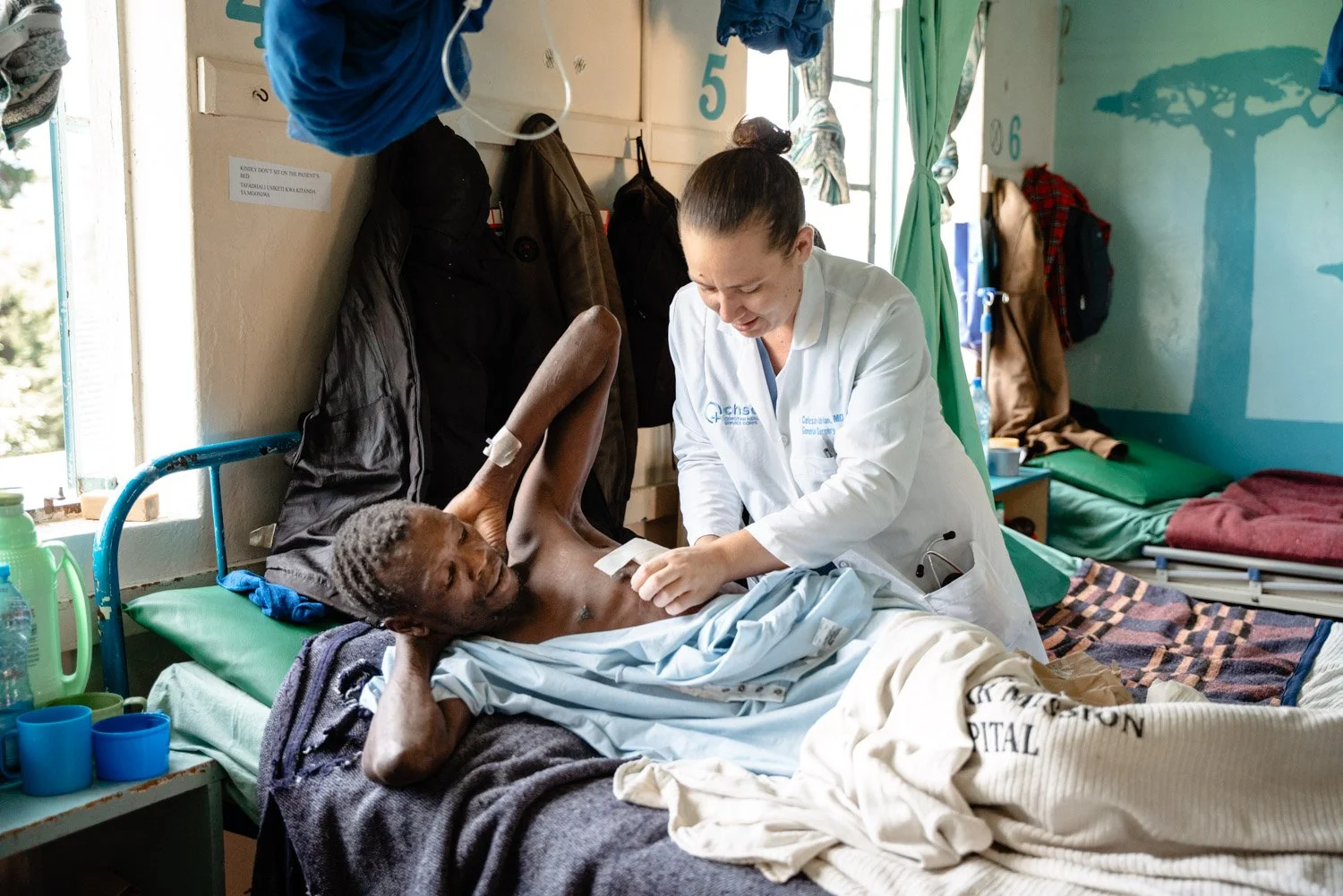
Dr. Celeste carefully changes a patient’s dressing in the post-operative ward.
So Dr. Celeste set her sights on helping these patients with chronic wounds.
One of the best ways to heal these kinds of injuries is with wound vac therapy. If you’ve never seen it, wound vac therapy involves placing a sponge-like layer over a wound and connecting it to suction. This simple process speeds up healing dramatically.
But just two years ago, Kapsowar didn’t have any wound vac machines. So Celeste got creative. She cut up old mattresses she bought in town, sterilized them, and rigged makeshift wound vacs herself.
Using these homemade devices—and other suction machines not originally meant for wounds—patients went through a couple of intense weeks of care until their wounds were either healed or ready for skin grafting.
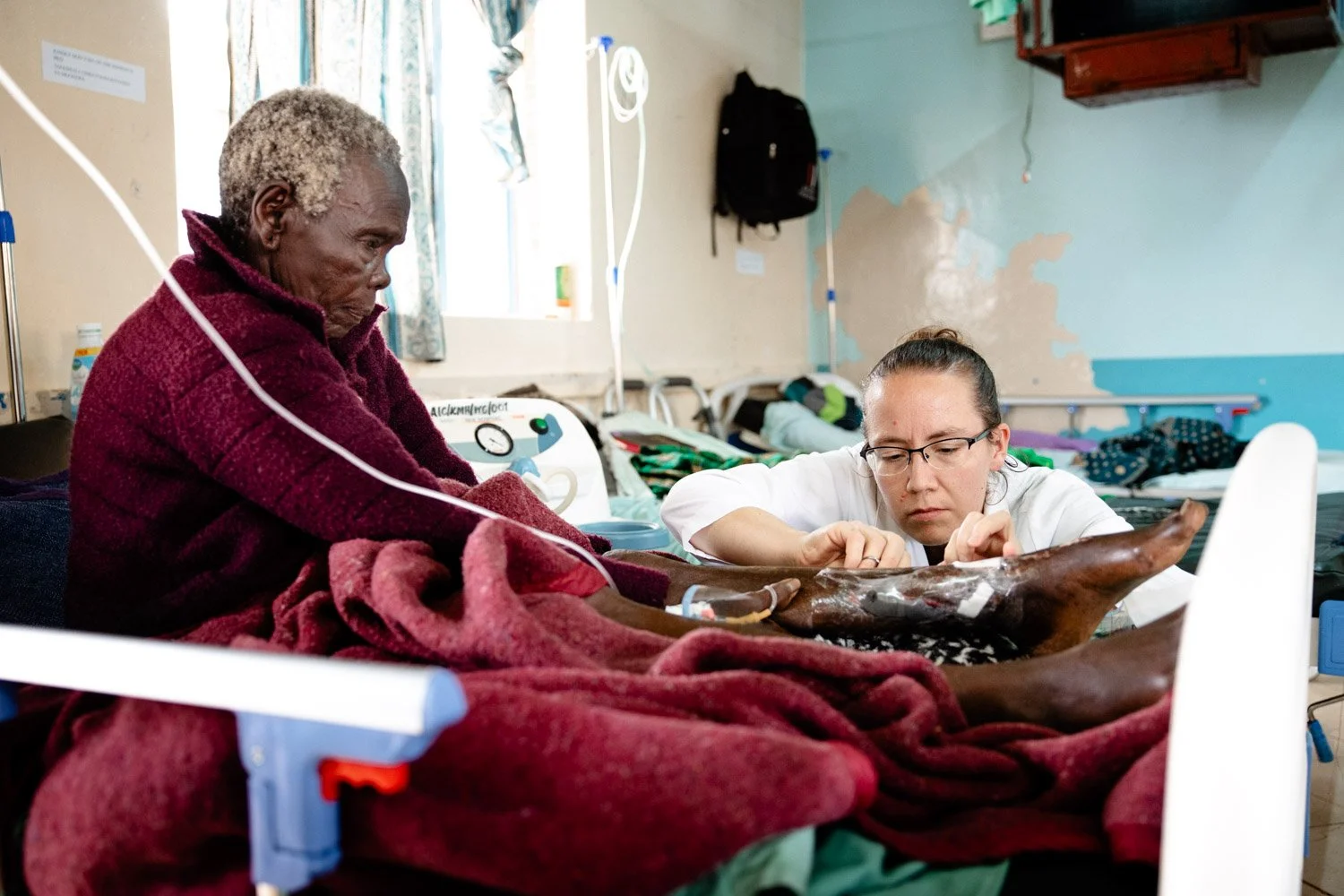
Dr. Celeste carefully changes a patient’s dressing in the post-operative ward.
But wound healing isn’t just about suction. Nutrition plays a huge role, too. Celeste goes the extra mile, bringing nutrient-rich foods to her patients—from peanuts to chocolate milk—and even making evening “protein rounds” to deliver extra food after a long day in the operating room.
Her dedication is paying off. “A lot of people have walked home on a leg that would’ve been cut off somewhere else,” she shares. Chronic wounds that would have festered—or even become cancerous—are finally healing.
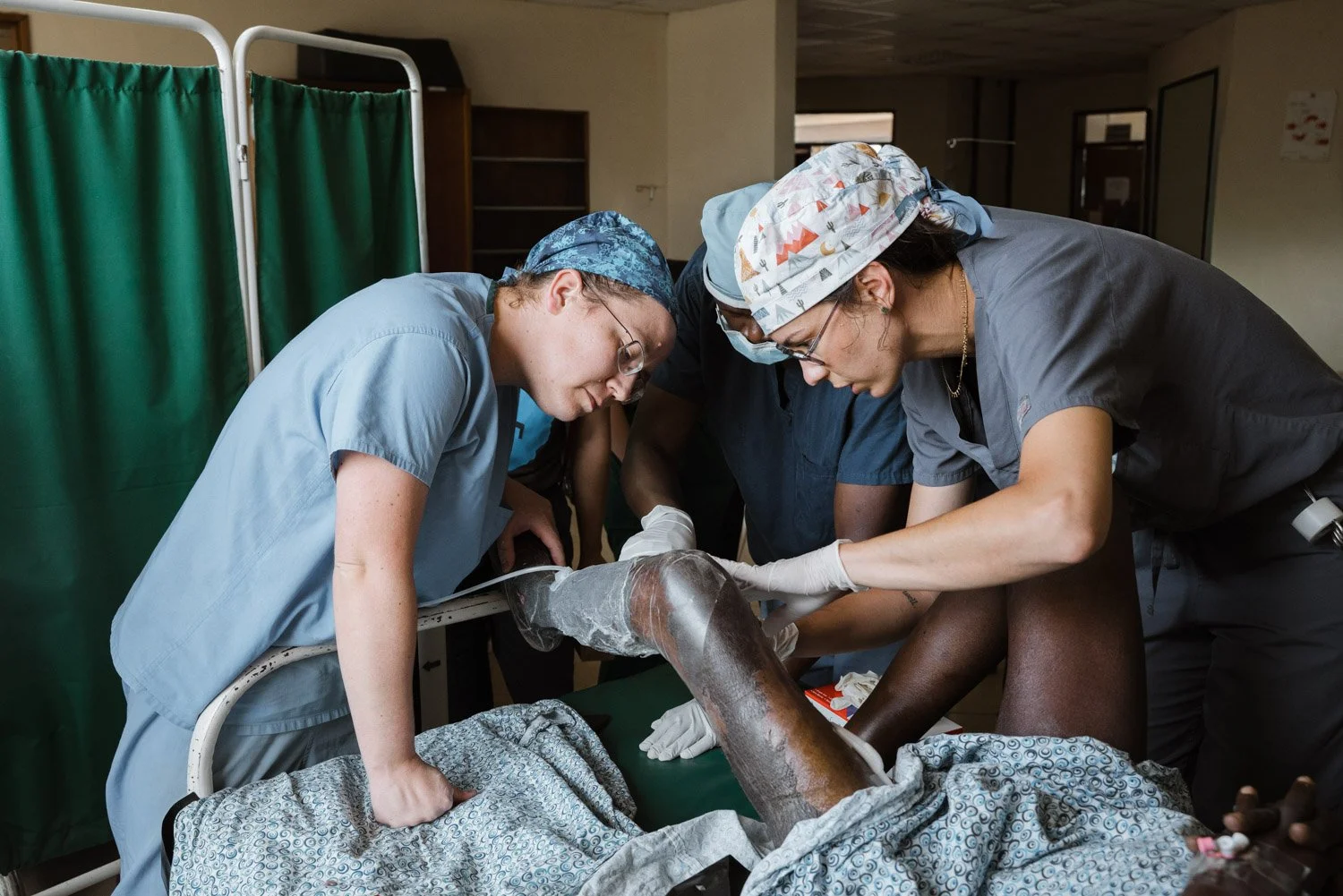
Dr. Celeste and visiting trauma surgeon PA, Brittany, prepare and bandage a patient’s wound before beginning wound vac therapy.
A volunteer named Dean, who has a background in biotech, connected Celeste with Design Outreach—a Christian nonprofit engineering organization that develops innovative, affordable medical devices for low-income countries. The team was already designing a wound care device for hospitals like Kapsowar and began collaborating closely with Celeste to adapt the device to the unique challenges of rural Kenya.
The new design doesn’t need constant electricity, is portable, and lets patients move around. “It gives patients a lot more mobility,” Celeste said. “They’re not stuck in bed all day, and that makes them a lot less miserable.”
The device is still in the final stages of development, but once complete, patients will be able to sit outside, walk to the bathroom, and stay connected to therapy for longer periods—which means even better results.
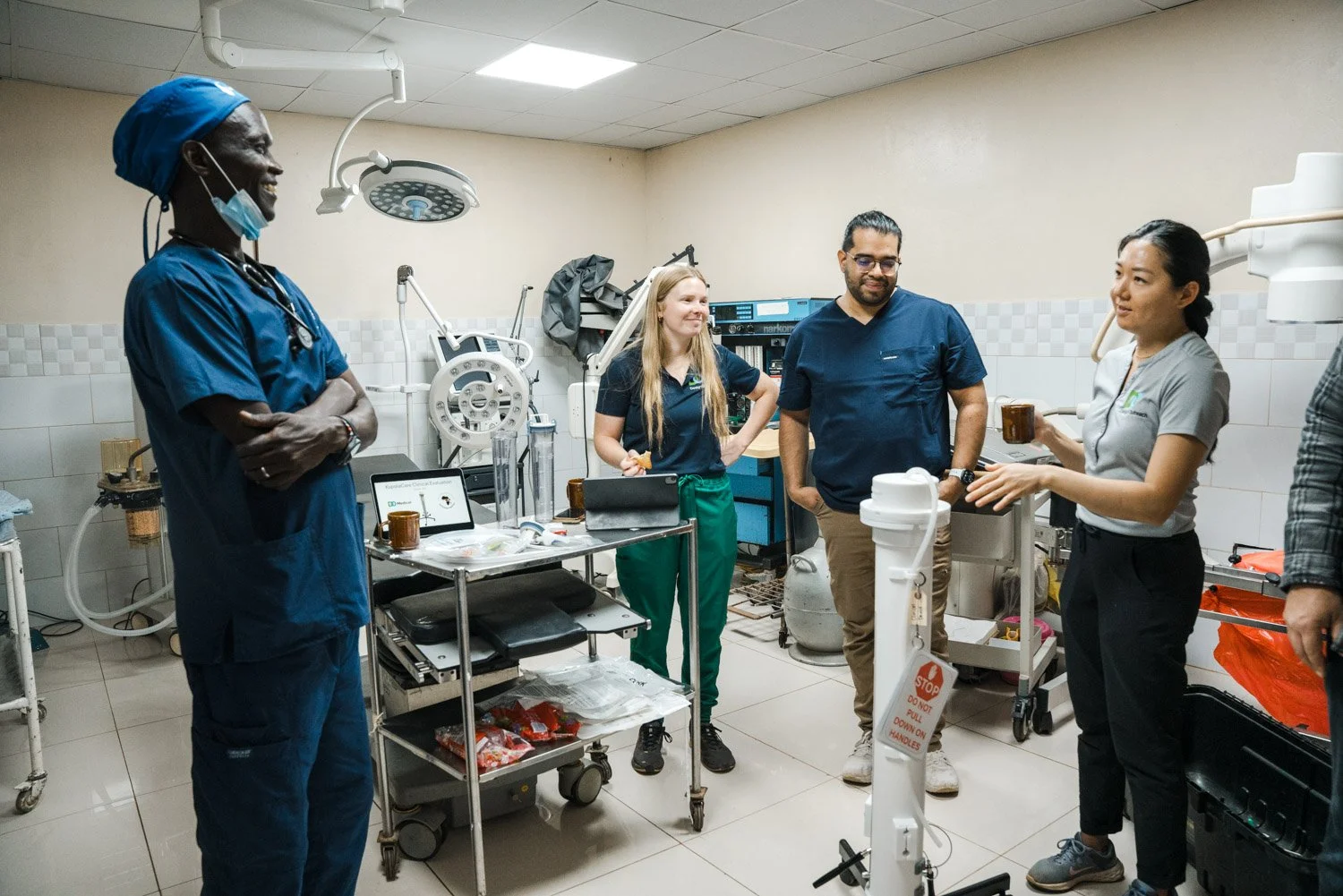
The Design Outreach team spent a week at Kapsowar on their second visit, continuing research and testing for their wound care device. Here, they review the design and gather feedback from Thomas, one of our nurse anesthetists.
Word has spread across the region. Many of Celeste’s patients come through referrals or word of mouth. One hospital in Eldoret, for example, sends her paralyzed patients from their palliative care unit—people with severe, chronic wounds that simply won’t heal and are often left to deteriorate.
But when these patients come to Kapsowar, they walk away healed.
Celeste marvels at God’s provision. “I often feel like the widow with the oil in the pot,” she said, reflecting on keeping wound care supplies in stock. “You get right down to the bottom, and then more appears. God has really blessed our wound care ministry here. Sometimes a church will reach out saying, ‘We have a little budget for wound care supplies—what do you need?’ and then at just the moment I need it, a package shows up.”
Today, Kapsowar is the only hospital in the county offering advanced wound vac therapy. For patients here, it’s more than just healing—it’s mobility restored, pain relieved, and hope renewed.