
Nancy was only 17 years old when she found herself pregnant. She hadn’t yet finished high school. That alone would be enough to turn anyone’s life upside down.
Then, at five months pregnant, Nancy was crossing the road when she was struck by a vehicle.
She suffered a brain injury and was left partially paralyzed, and the boyfriend who had fathered the babies disappeared.
Four months later, Nancy arrived at Kapsowar Mission Hospital to deliver her twins. By then, weeks of being unable to walk had left her with painful bedsores and in need of significant care. Despite everything her body had endured, she safely delivered two healthy babies.
Like many of the vulnerable families we serve, Nancy didn’t have a birth certificate or national ID—documents required to enroll in Kenya’s national health insurance. Without coverage, her family faced a hospital bill of nearly $675, an impossible amount for subsistence farmers already struggling to put food on the table.
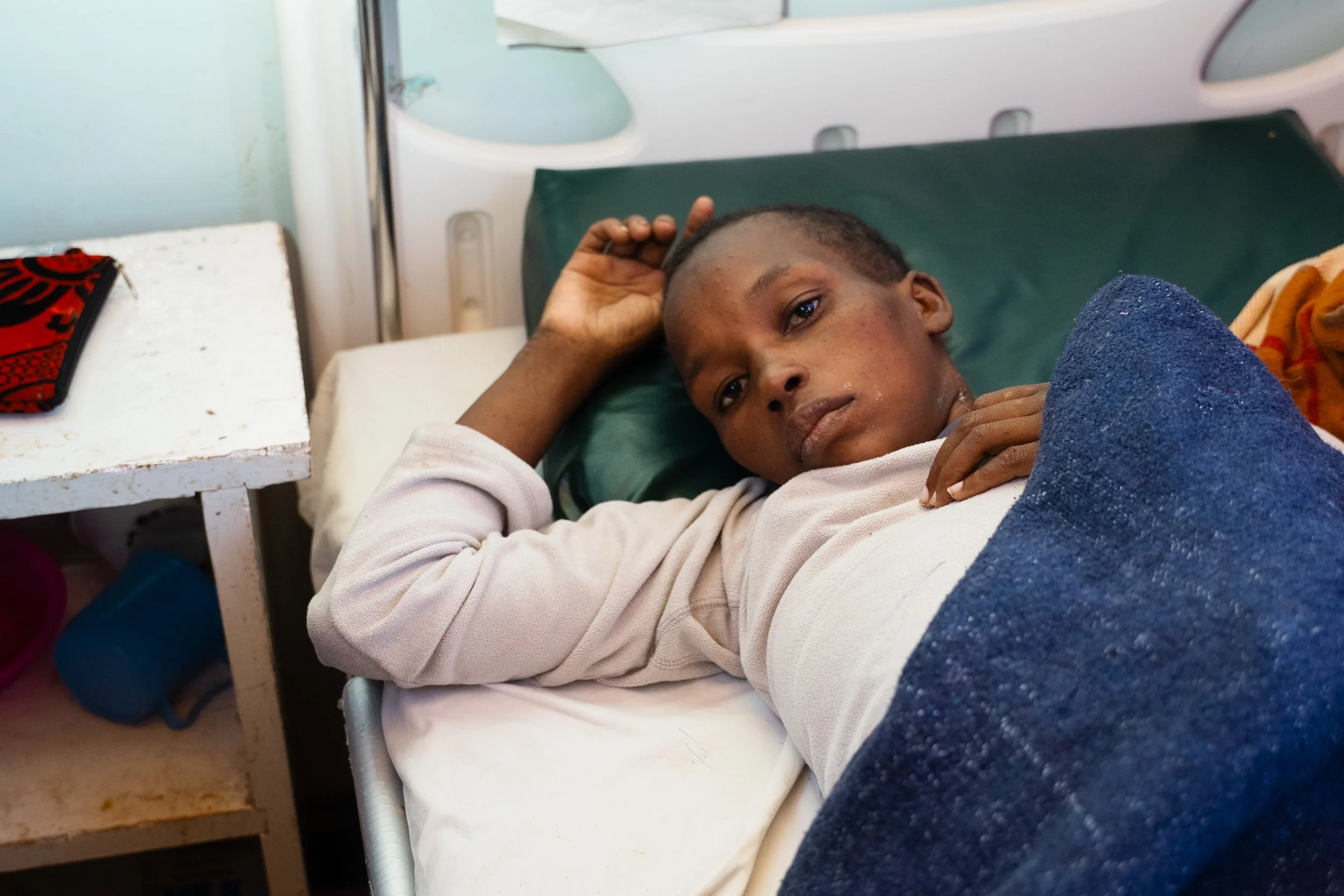
Nancy in our maternity ward shortly after safely delivering her twins.
Our social work team visited Nancy’s home after she was discharged. They found that due to her health complications, she wasn’t able to produce enough breastmilk to feed her twins.
The community had already rallied around her, raising what they could. But after purchasing food for a household of six and infant formula for two newborns, there was almost nothing left.
Nancy also needed physical therapy, but even getting to the hospital was a problem. Transportation could cost a full day’s wages, and sometimes she would make the trip only to find that no provider was available at the government hospital closer to her home.
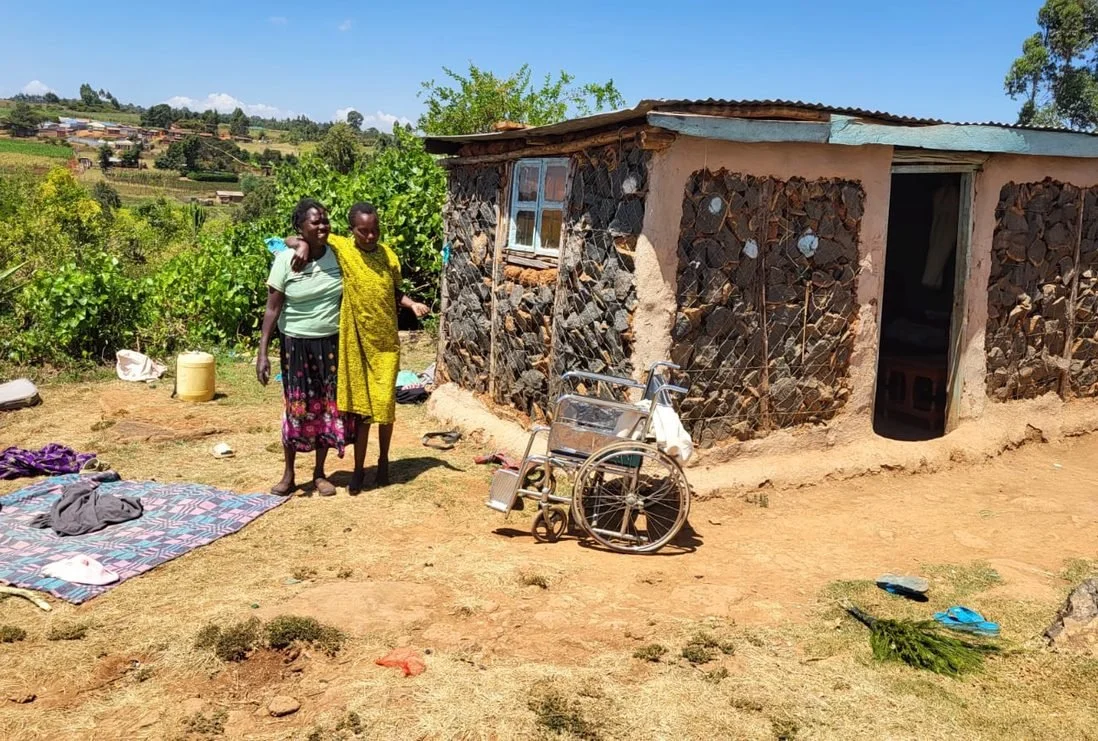
Nancy standing with the support in front of her home during a home visit from our social work team.
This is where our partners stepped in.
Nancy’s hospital bill was paid. Her weekly transportation was covered. She began receiving physical therapy at our hospital, and her twins received the formula they needed to grow.
Because of your support, Nancy continues to return each week for physical therapy while her twins grow stronger alongside her.
And as I see Nancy coming for her appointments at the hospital, I’ve noticed something else.
She’s smiling again.
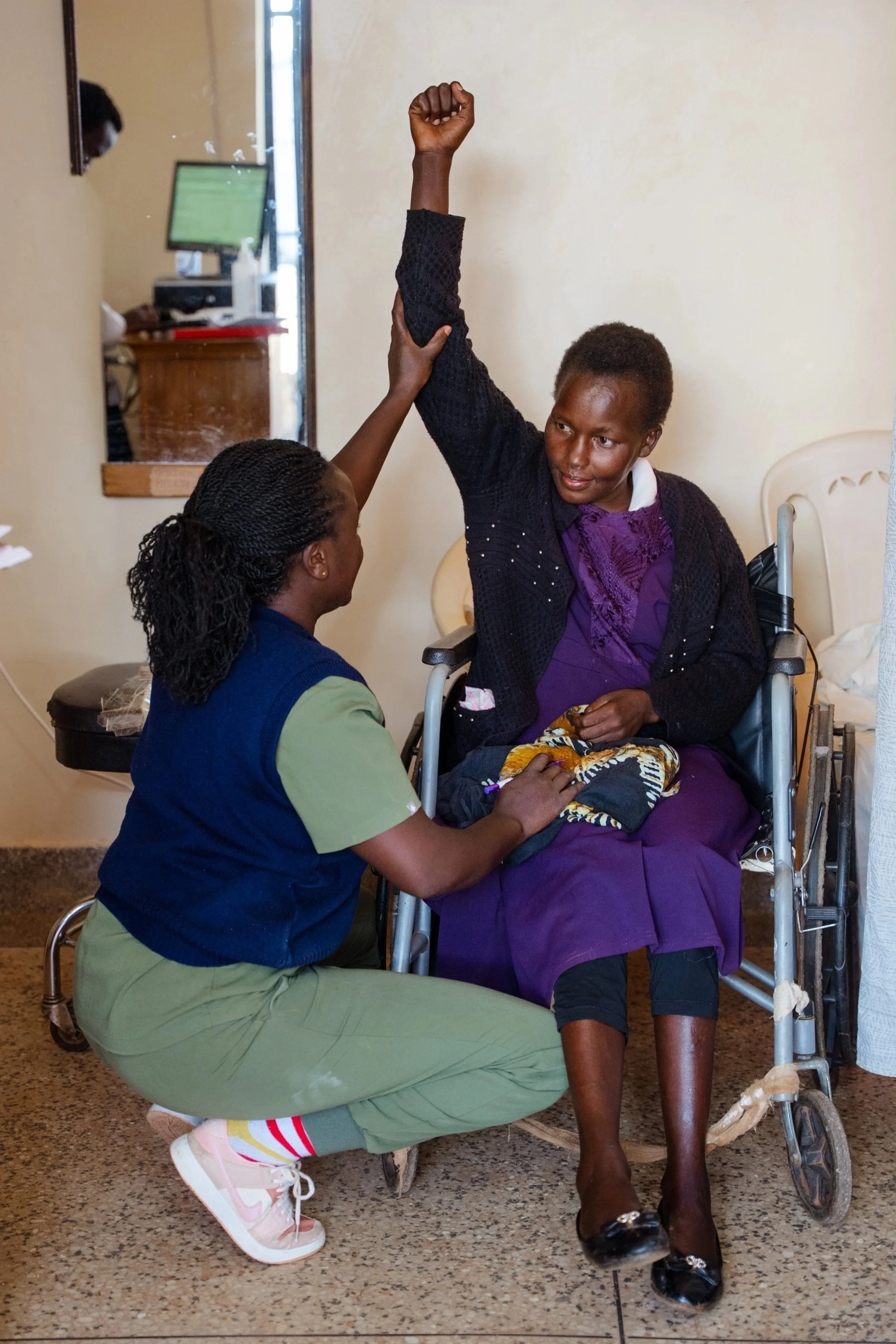
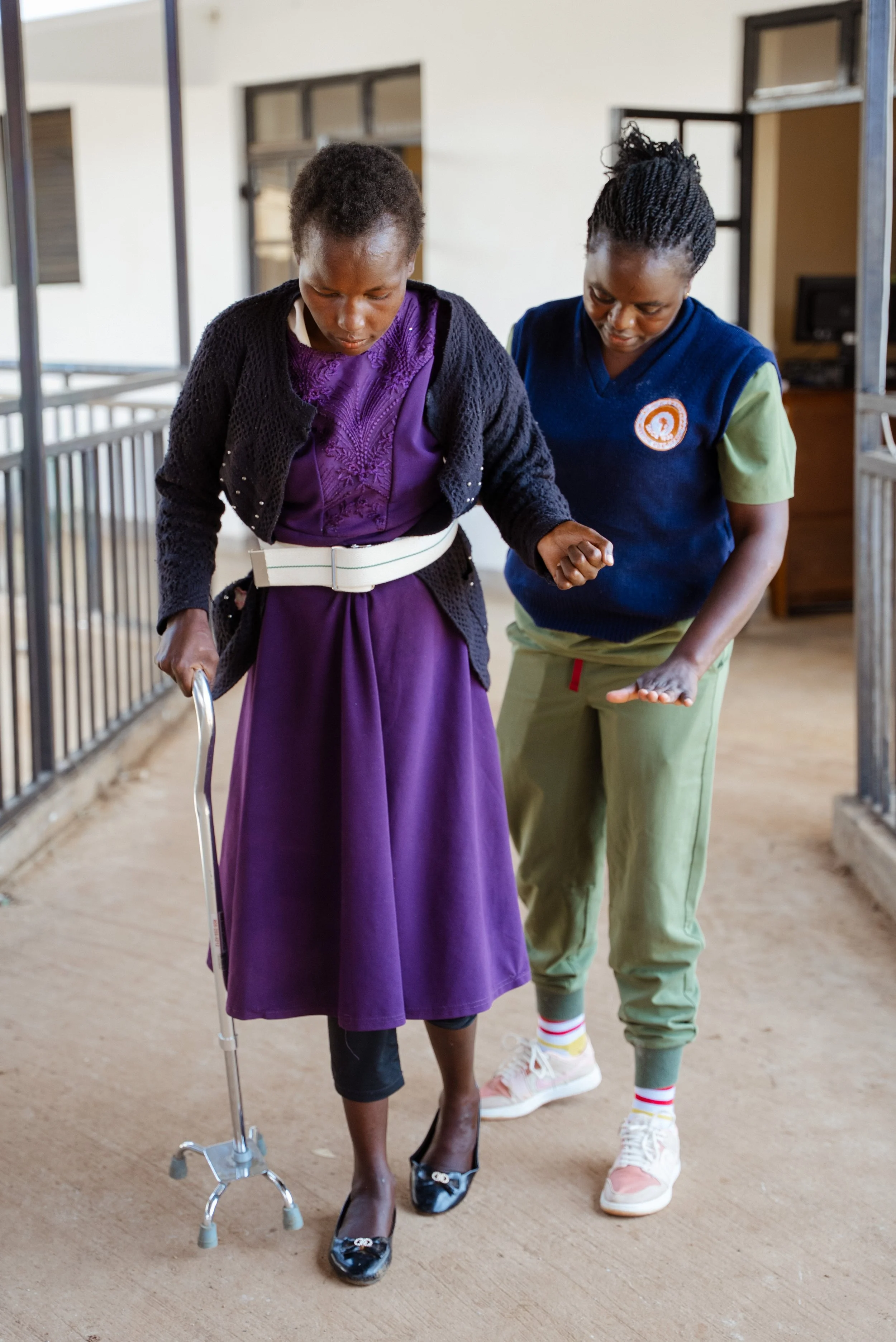
Nancy working hard with Faith, our physical therapy instructor, as she rebuilds strength and mobility.
As I think about Nancy’s story, I’m struck by how many impossible challenges one young woman has had to carry.
A pregnancy at seventeen years old. Poverty. Twins. A brain injury. Paralysis. Trying to care for two newborns while learning to walk again.
One thing I’ve learned over the past few years of living in Kenya is that the greatest difference between poverty in Kenya and poverty in the United States isn’t simply having less money.
It’s the lack of safety nets.
When crisis strikes, there is often no disability assistance. No insurance. No savings to fall back on. Very limited government support.
Families simply do the best they can - borrowing money from family, selling livestock, fundraising from the community. And sometimes they still come up short.
That’s where Friends of Kapsowar comes in. Not because we can solve every problem. But because, one patient at a time, we can help carry burdens that would otherwise be impossible to bear.
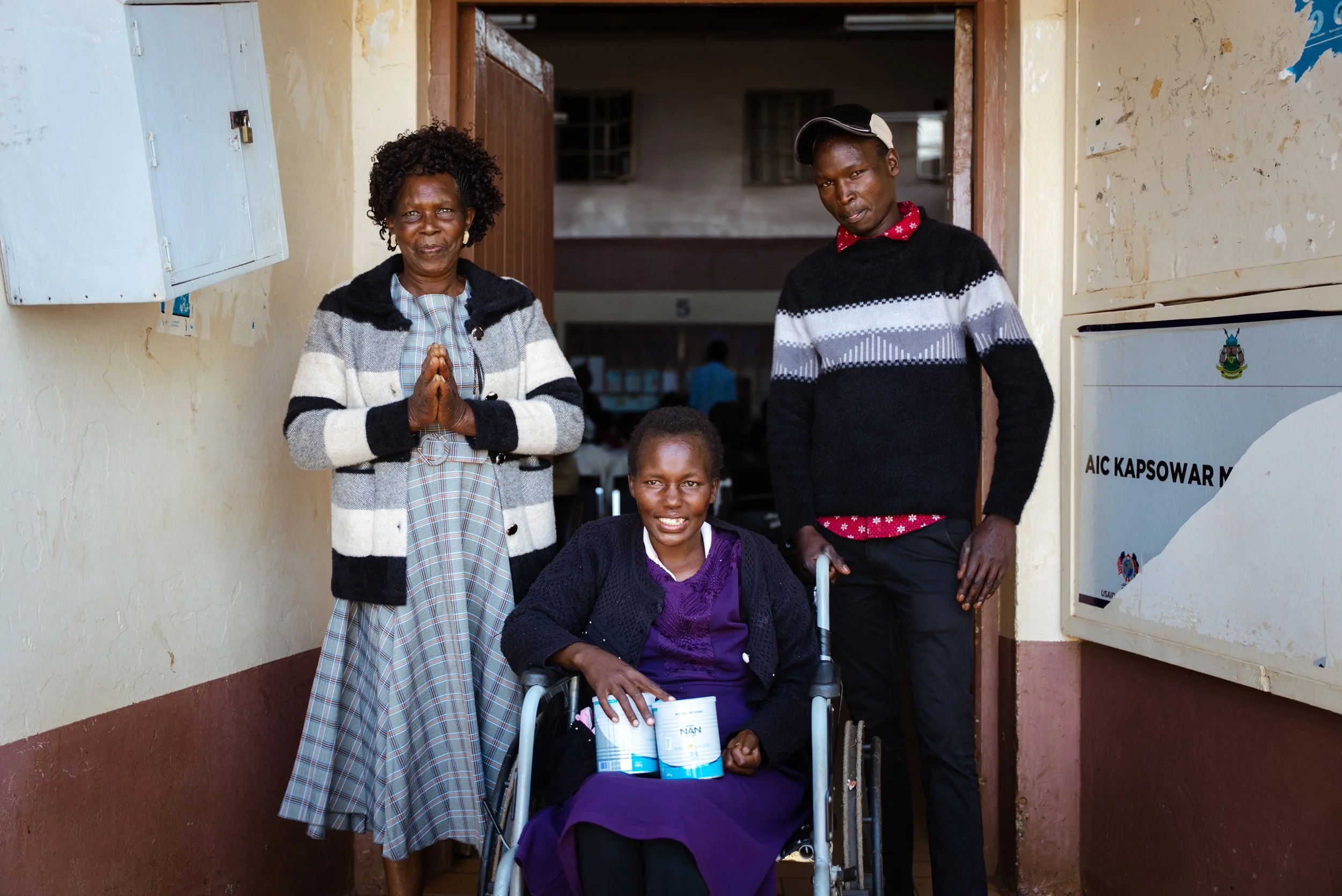
There will be another family like Nancy’s. And when they come through our doors, we want to be able to help.
Together, we can continue to be the safety net for families who don’t have one.
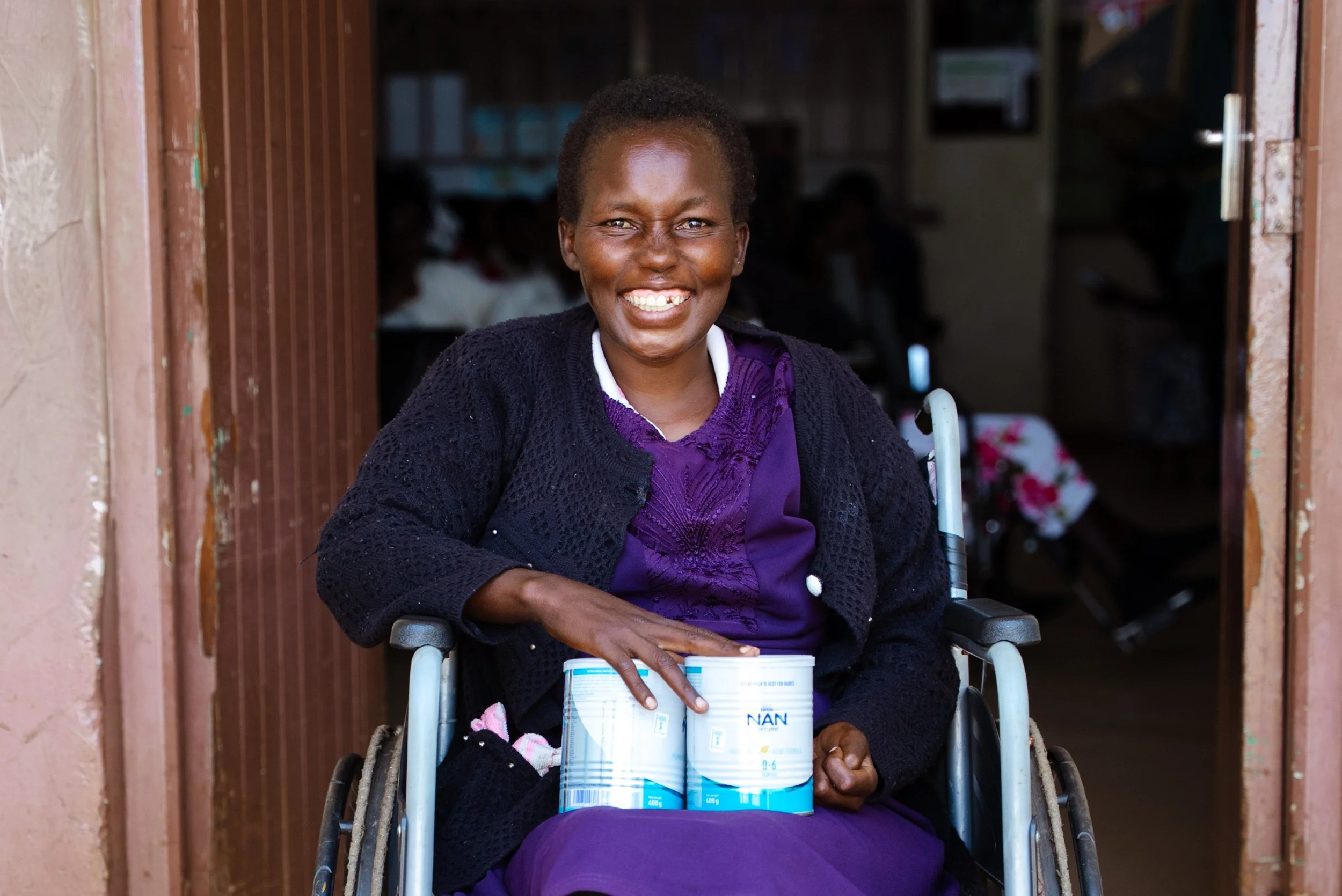
Nancy looks so different from the young woman we first met. She now beams as she holds the formula we provide for her two quickly growing babies.
A note on these stories: Friends of Kapsowar shares stories of patients and the work happening at Kapsowar Mission Hospital. Many needs are met through the generosity of multiple partners, and we’re grateful to recognize African Mission Healthcare and Daktari Child Health Care as being a part of Nancy’s story as well.