
When the Specialist Isn’t Down the Hall
A young pregnant mother lay quietly on the exam table as the ultrasound probe moved across her chest. On the screen, the black-and-white images of her heart flickered as our doctors examined each chamber.
The woman had come with symptoms that raised concern for heart disease—a serious and potentially life-threatening complication during pregnancy.
Within minutes, visiting cardiolgist Dr. Johannsen and his team were able to evaluate her heart together. Thankfully, her heart looked normal. The cause of her symptoms turned out to be tuberculosis, not heart disease.
But being able to rule out a cardiac problem immediately—right here at the hospital—made all the difference.
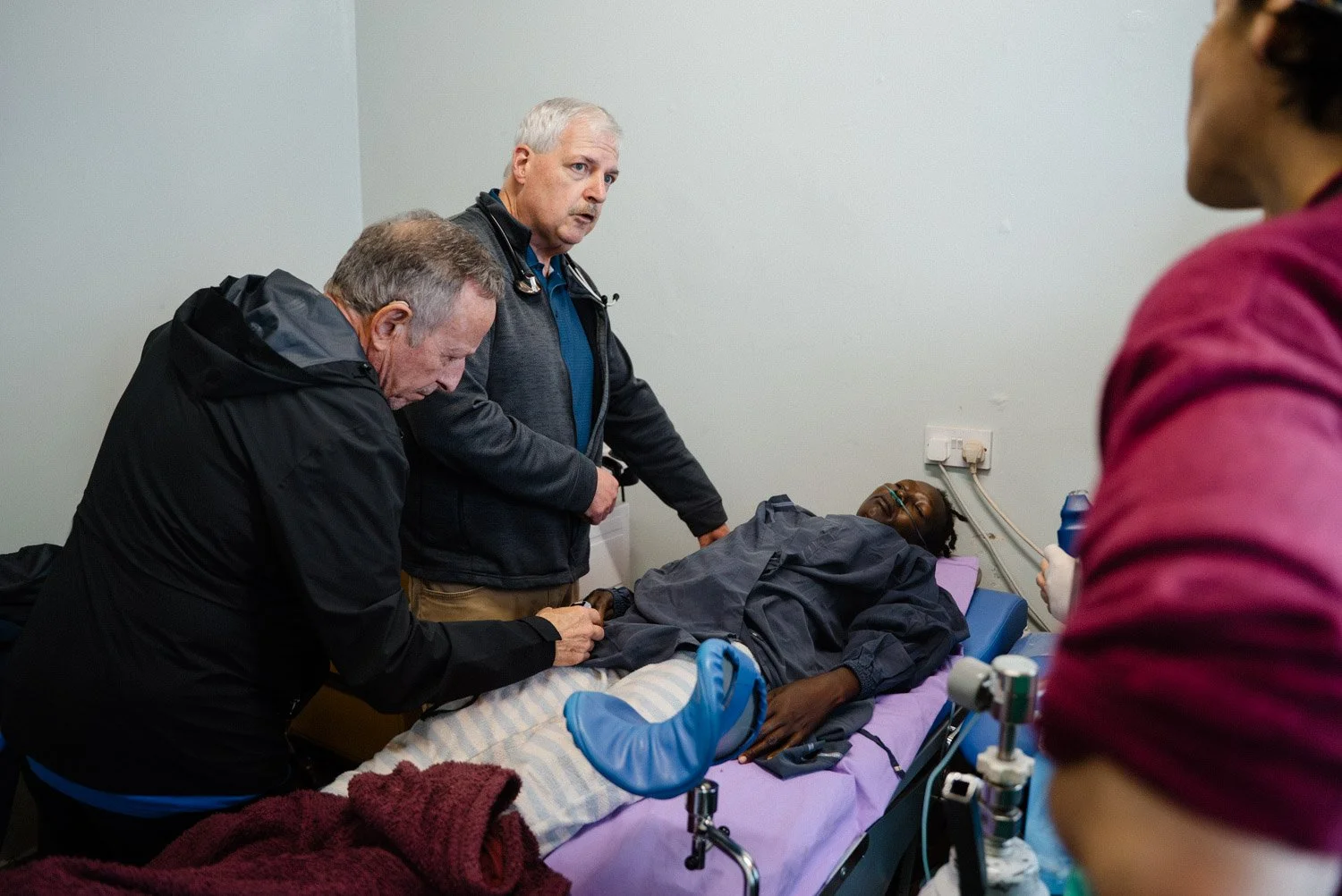
Cardiologists Dr. Ron Johannsen and Dr. James Murphy examine a patient.
In the United States, a patient with suspected heart disease would simply be referred to a cardiologist.
At Kapsowar, there often isn’t one available.
Our doctors care for everything—from premature newborns fighting for life, to elderly patients with strokes, to children with complex heart conditions.
In most hospitals in the West, each of those patients would be treated by different specialists.
Here, our doctors must do it all.
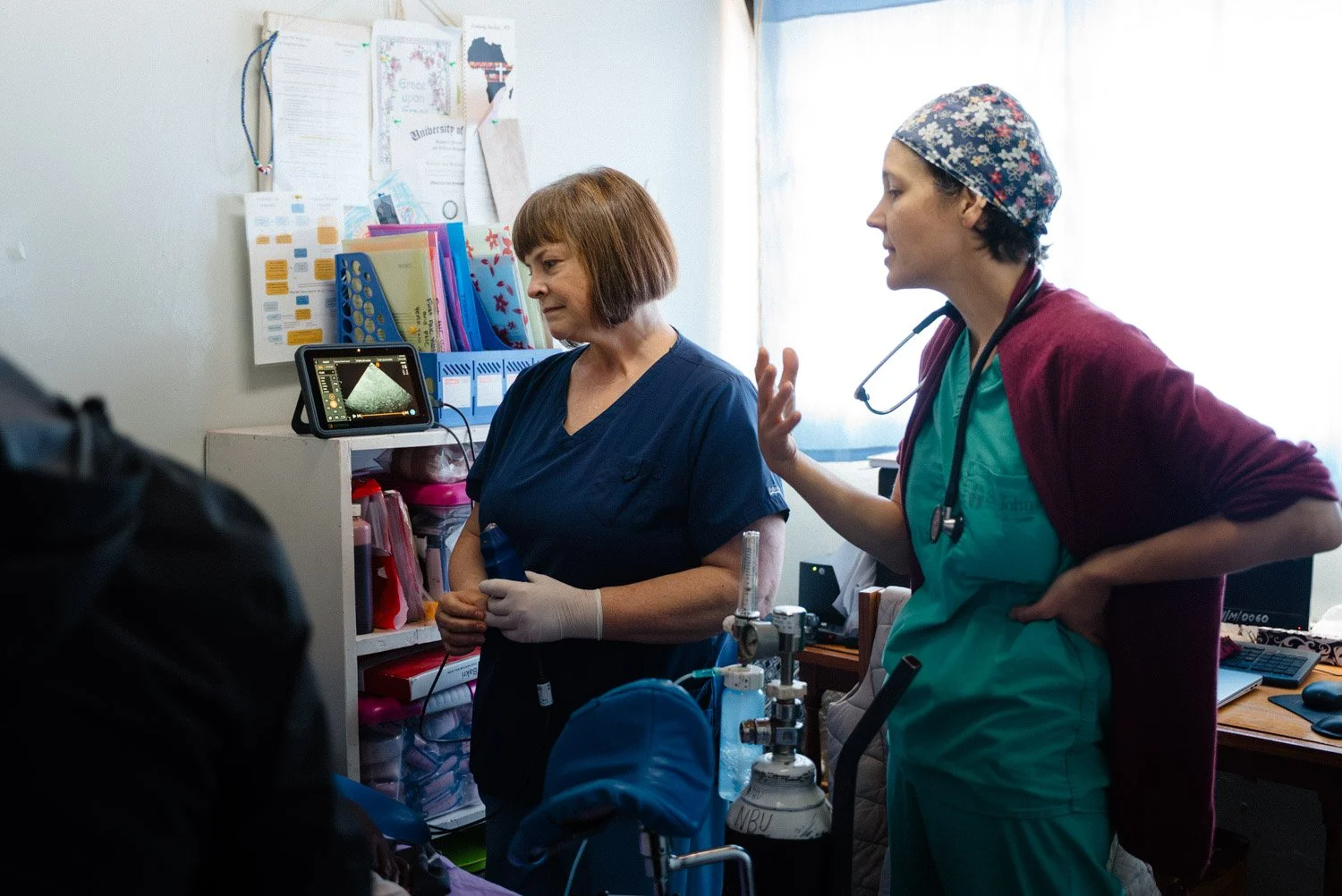
Eileen Nemec, echo sonographer, joins Dr. Ron Johannsen and Dr. James Murphy as they review a patient’s case and echocardiogram with OB-GYN Dr. Kim Walhof.
That’s why visits like Dr. Johannsen’s are so valuable.
He and his team didn’t come simply to see patients—they came to equip the doctors already serving here.
“The goal isn’t just the patients we see while we’re here,” Dr. Johannsen shared. “It’s teaching the doctors. If they learn ten useful things during the week and pass those on to others, patient care improves exponentially.
During their time at Kapsowar, they worked alongside our team—strengthening bedside echocardiogram skills, advancing heart failure treatment, and even performing a cardioversion here for the first time, restoring a patient’s heart to a normal rhythm.
These are the kinds of interventions typically done by specialists in the West—but through training like this, they’re becoming part of everyday care at Kapsowar.
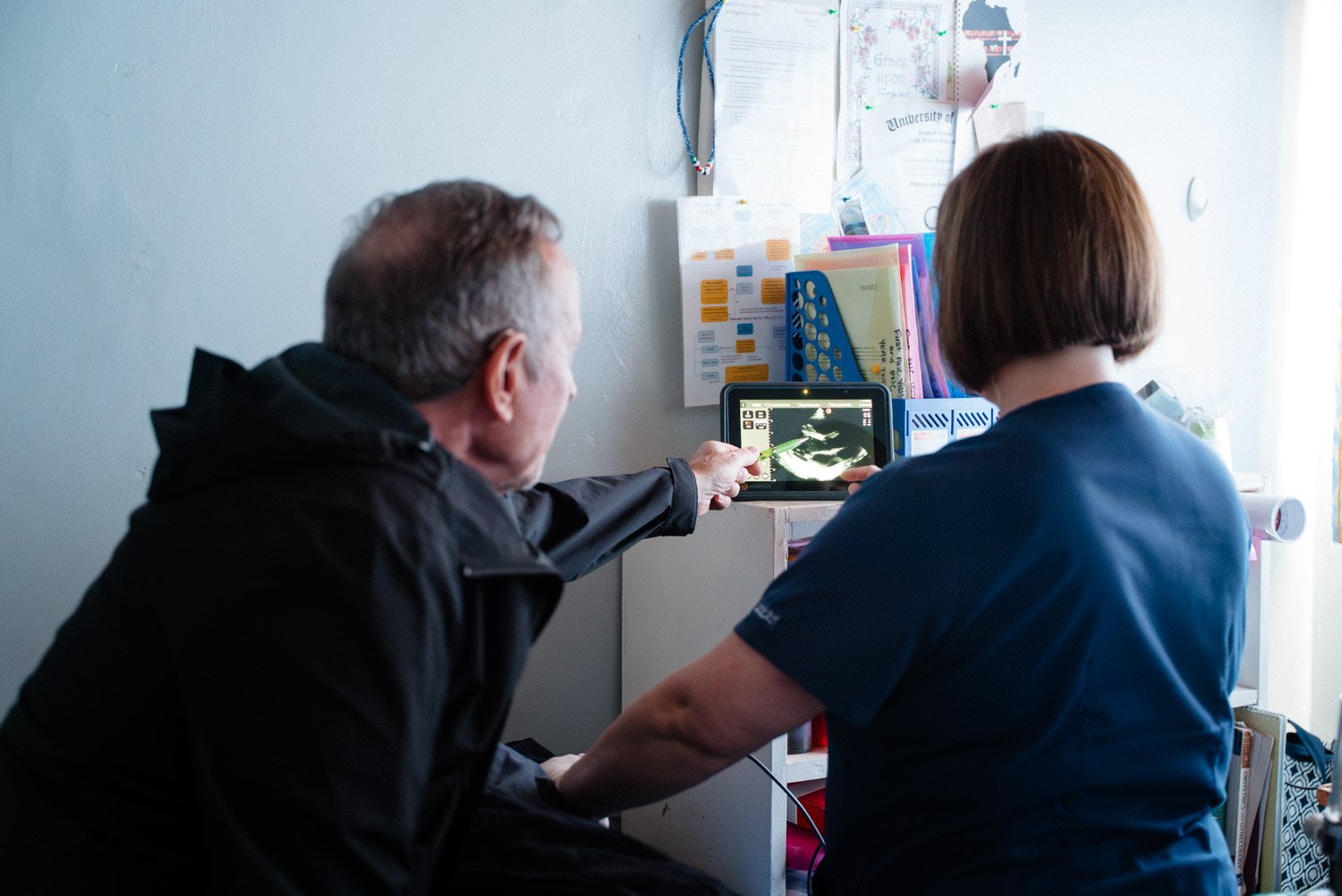
Dr. Ron Johannsen and Eileen Nemec review an echocardiogram together—teaching what to look for and how to interpret each image.
This visit was their fifth trip to Kapsowar, as they’ve been faithfully returning for many years—continuing to build skills and relationships with our team. Their impact doesn’t end when they return home.
Because of the strong relationships they’ve built with our team, Dr. Johannsen and his colleagues are available daily for remote consultations and image review when complex cases arise.
There have been times when our doctors performed an ultrasound while sharing the images with him overseas—discussing the patient in real time and getting guidance for treatment.
For a hospital without easy access to specialists, that kind of support is invaluable.
Their partnership has also helped launch the rheumatic heart disease screening program. Teams travel to local schools with portable ultrasound machines, identifying children with early signs of disease and sending images to cardiologists like Dr. Johannsen for confirmation.
When caught early, treatment can be as simple as monthly penicillin injections—often changing the course of a child’s life.
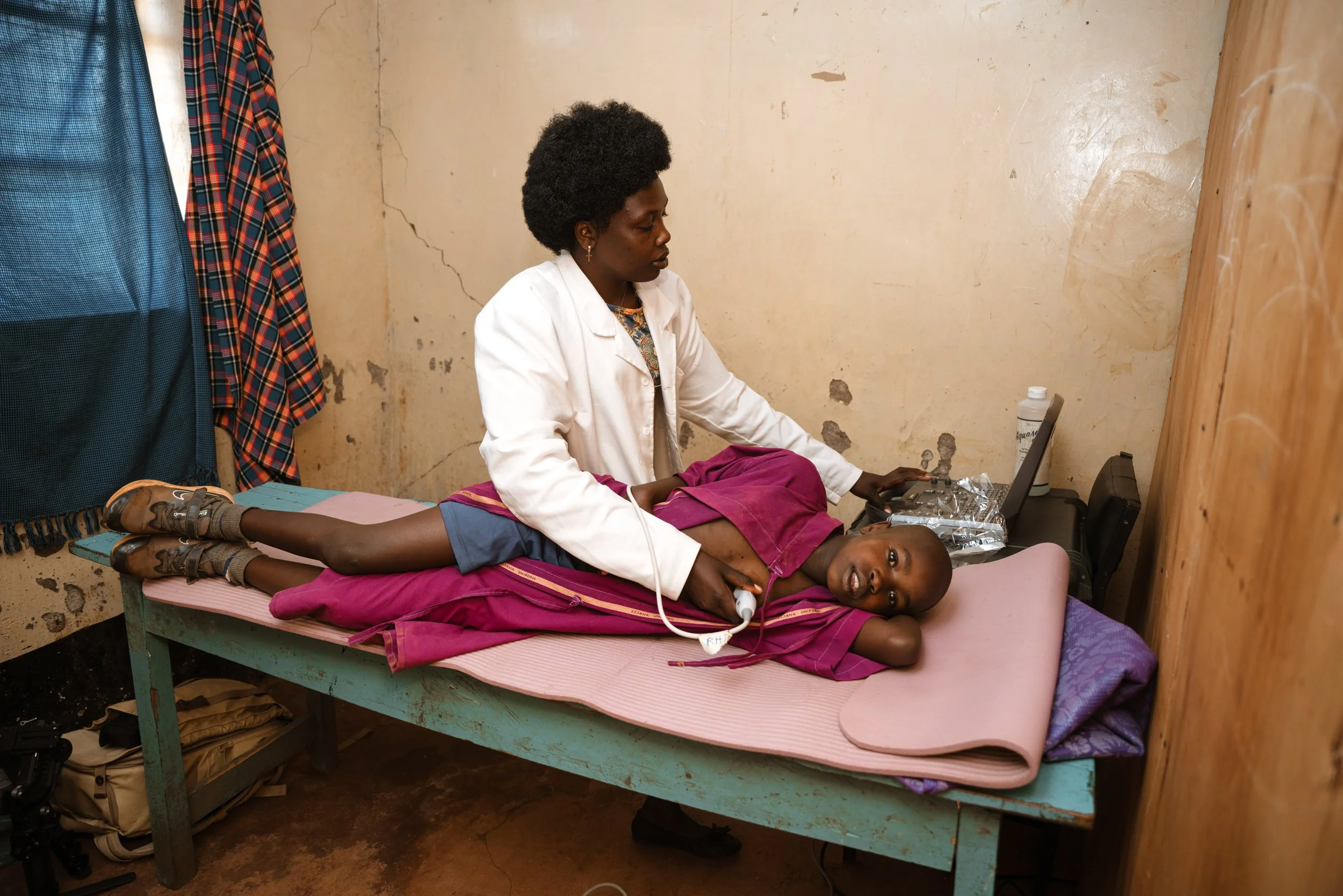
Dr. Ron has played a key role in building our rheumatic heart disease (RHD) screening program, helping review ultrasounds remotely of children whose hearts need closer care.
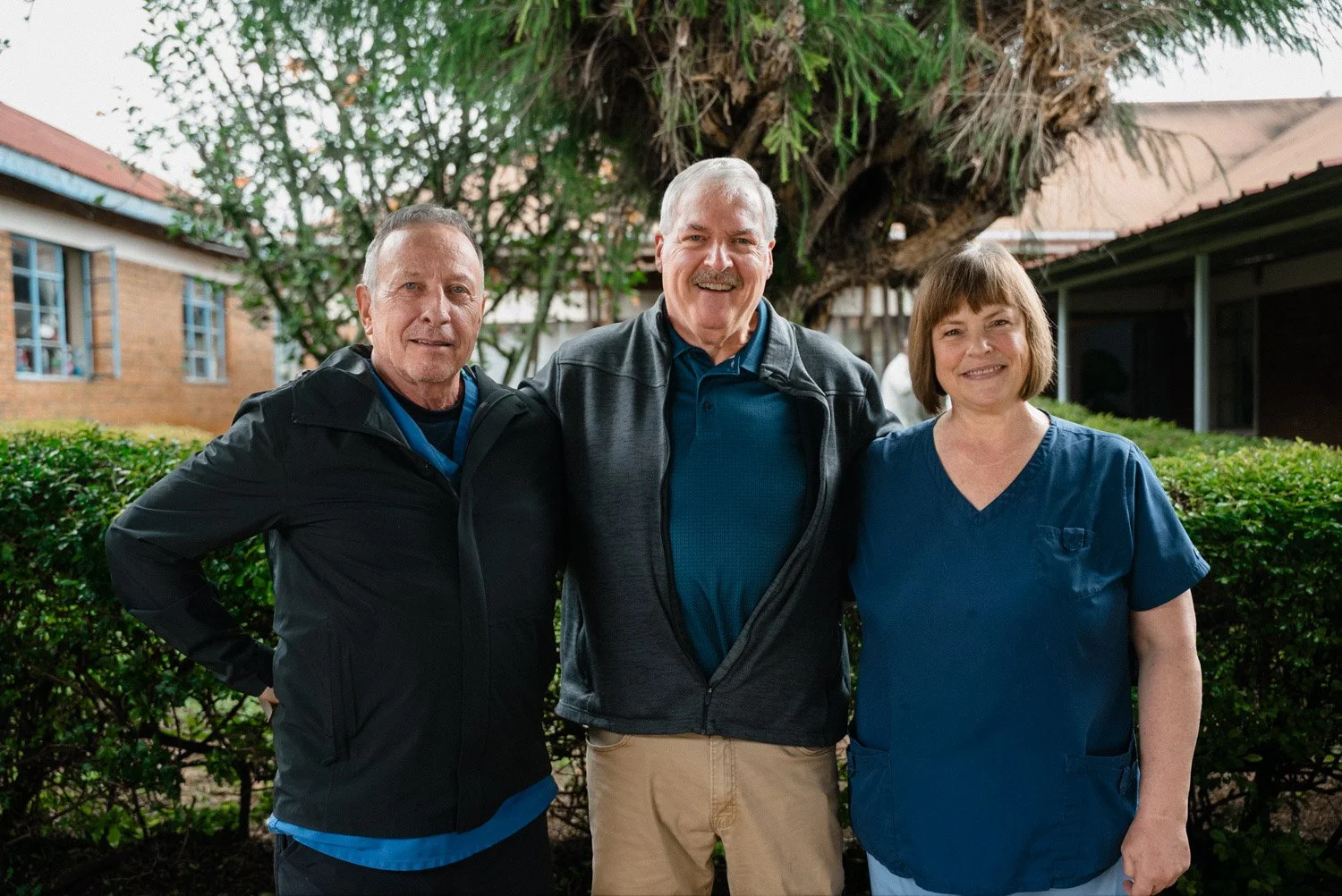
We’re deeply grateful for Dr. Ron, Dr. James, and Eileen—and for the many visitors like them who generously bring their expertise to Kapsowar.
Visits like this may last only a week, but the impact reaches far beyond.
The knowledge shared, the skills passed on, and the relationships built continue strengthening care at Kapsowar long after the team has returned home.
But what’s just as meaningful is how much our visitors receive in return.
For Dr. Murphy, it was his first time visiting. He shared,
“To say the experience was eye-opening is an understatement. I left feeling uplifted by the people and the care I witnessed—but also struck by how under-resourced such an exceptional team truly is.”
Time and again, we hear this same story—visitors come to give, but leave changed themselves.