
When You Can’t Fix It
By the time John met her, the young woman’s lungs were already beginning to fail.
She was only around twenty years old. After ingesting a toxic chemical, she had initially been treated and sent home. But she returned to Kapsowar struggling to breathe, and over the days that followed, her condition continued to worsen.
The team placed her on the breathing support they had available. John called the ICU and lung specialists in Eldoret, hoping there might be another treatment, another machine, another place where she could be transferred. The specialists discussed her case together and called him back.
There was nothing more they could do—no procedure, medication, or referral that could change what was happening.
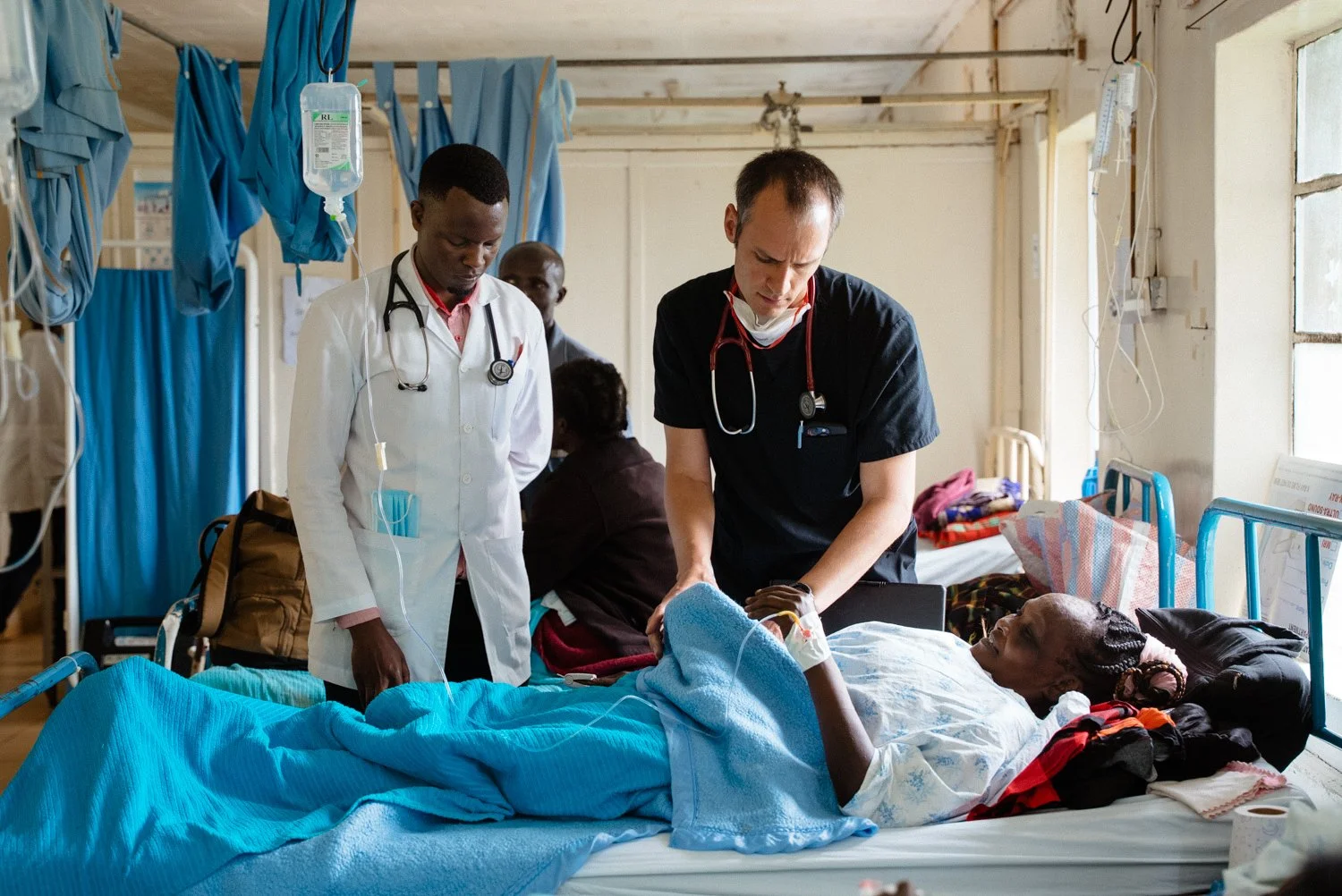
John and clinical officer Dennis examine a patient in the medical ward.
When we last shared John’s story, we told you how he and his family came to Kapsowar—the years of medicine and ministry that prepared them, the unexpected turns along the way, and the decision to leave a life they knew to serve here.
Recently, I sat down with him again to ask what it has actually been like since they arrived.
The hardest part, John said, has been coming up against limitations.
A doctor begins with understanding what is wrong. Much of medicine depends on a patient’s story, but language and cultural differences can make that difficult to uncover. Then come the tests—some are unavailable at Kapsowar.
If a patient needs advanced care, the next option may be hours away in Eldoret. Even then, an ICU bed may not be available, or the family may have no way to pay.
“Poverty isn’t necessarily just about what you have in your pocket,” John said. “Poverty is about options and availability.”
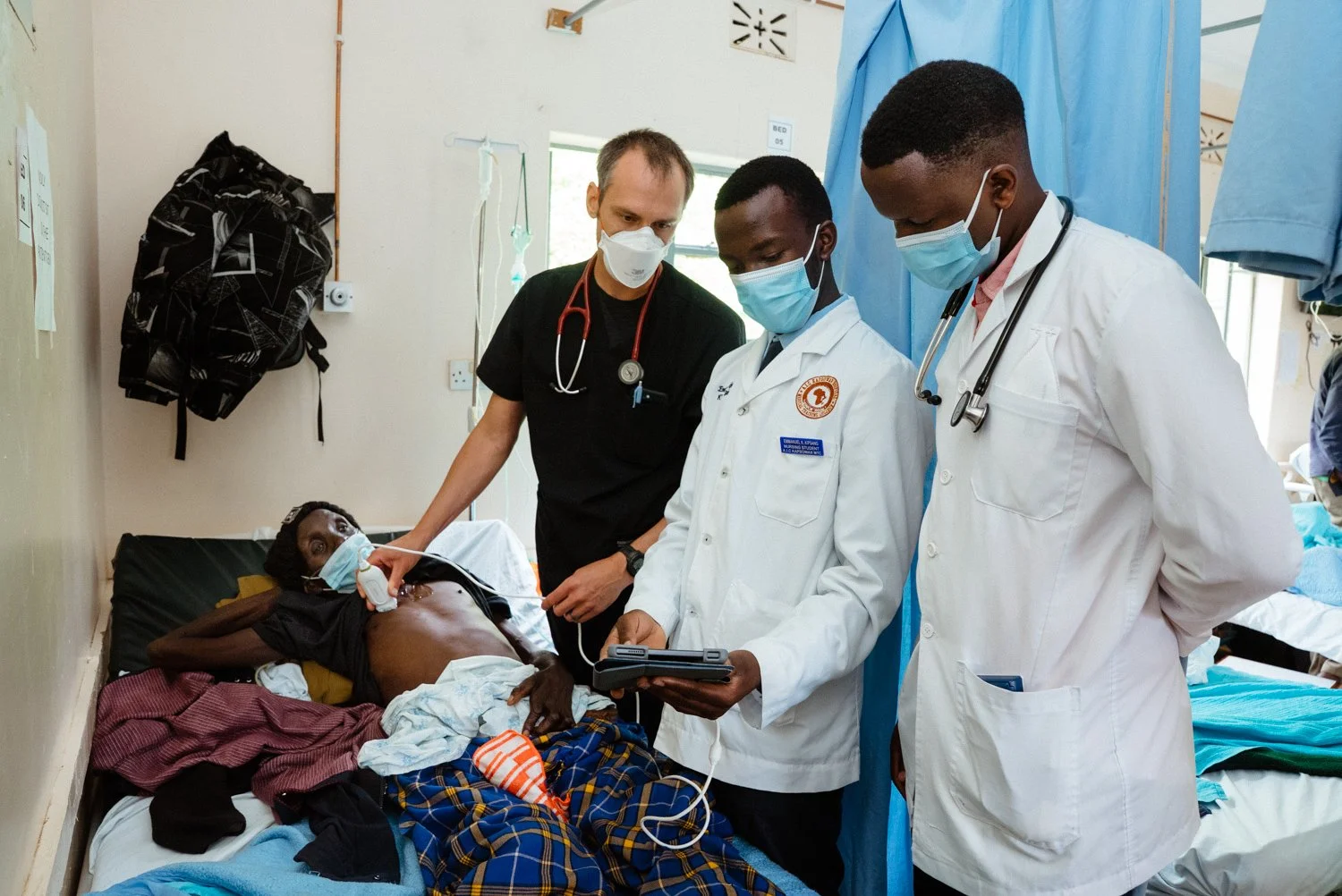
John, Dennis, and a nursing student perform a bedside echocardiogram.
Most families around Kapsowar live through subsistence farming, with little buffer for an emergency. The healthcare strike has narrowed their options even further, and many arrive at Kapsowar after being turned away elsewhere.
“They come desperate,” John told me. “They’re saying, ‘If you can’t help us, then we have nothing else.’”
John was trained to keep looking for the next step—another test, a specialist, a transfer, an ICU. At Kapsowar, he reaches the end of those steps much more quickly.
And then there are John’s own limitations.
“There are only a certain number of patients I can see per day,” he said. “There’s only so much energy and bandwidth I have for this. At some point, I just can’t do any more, because I get tired as well.”
It is hard to admit that when the needs continue long after your own strength is gone. There is always one more patient, one more difficult case, one more family hoping you will know what to do.
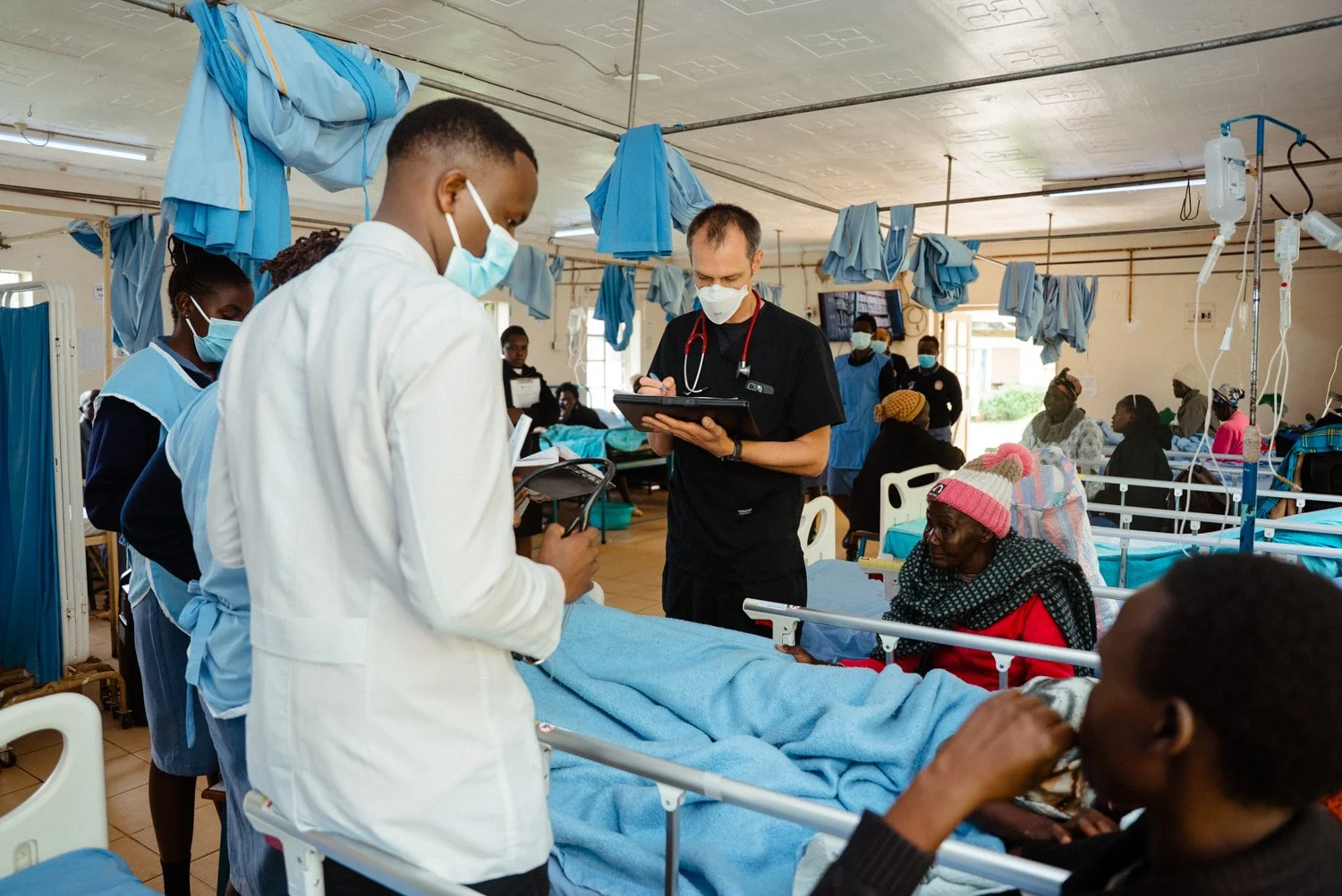
John and the medical team make rounds in the medical ward.
But John is learning that being human means being limited.
His faith has become especially important there, at the edge of what he knows and what the hospital can offer. There are moments when he has to be honest with the patient, honest with himself, and honest with God: I have done everything I know how to do. There is nothing more I can do.
“I’ve done all that I’m capable of doing,” John said. “This person is in your hands.”
That was where he found himself with the young woman whose lungs were failing.
A visiting ICU nurse named Mary spent hours beside her, talking with her and helping the other nurses care for her. The chaplains came. Her pastor came. John spoke with her family about what was happening and prepared them for the moment when she would no longer be able to breathe.
They could not stop it. But they did not leave her alone in it.
After she died, her father invited John to join the family for a memorial service near the hospital morgue. The room was packed—nearly a hundred people gathered to grieve a young woman who should have had her whole life ahead of her. Her family thanked John for what he had done, though from his perspective, it did not feel like much. He had not saved her. He had simply stayed.
“We couldn’t fix her body,” John said, “but we were present. We were there with her all the way to the end.”
John told me the experience will stay with him for the rest of his life—not simply because he lost a young patient, but because her family invited him into one of their most painful and sacred moments. He had come here as an outsider, still learning the language and often unsure of what was expected of him. Yet when this family gathered to mourn their daughter, they made room for him too.
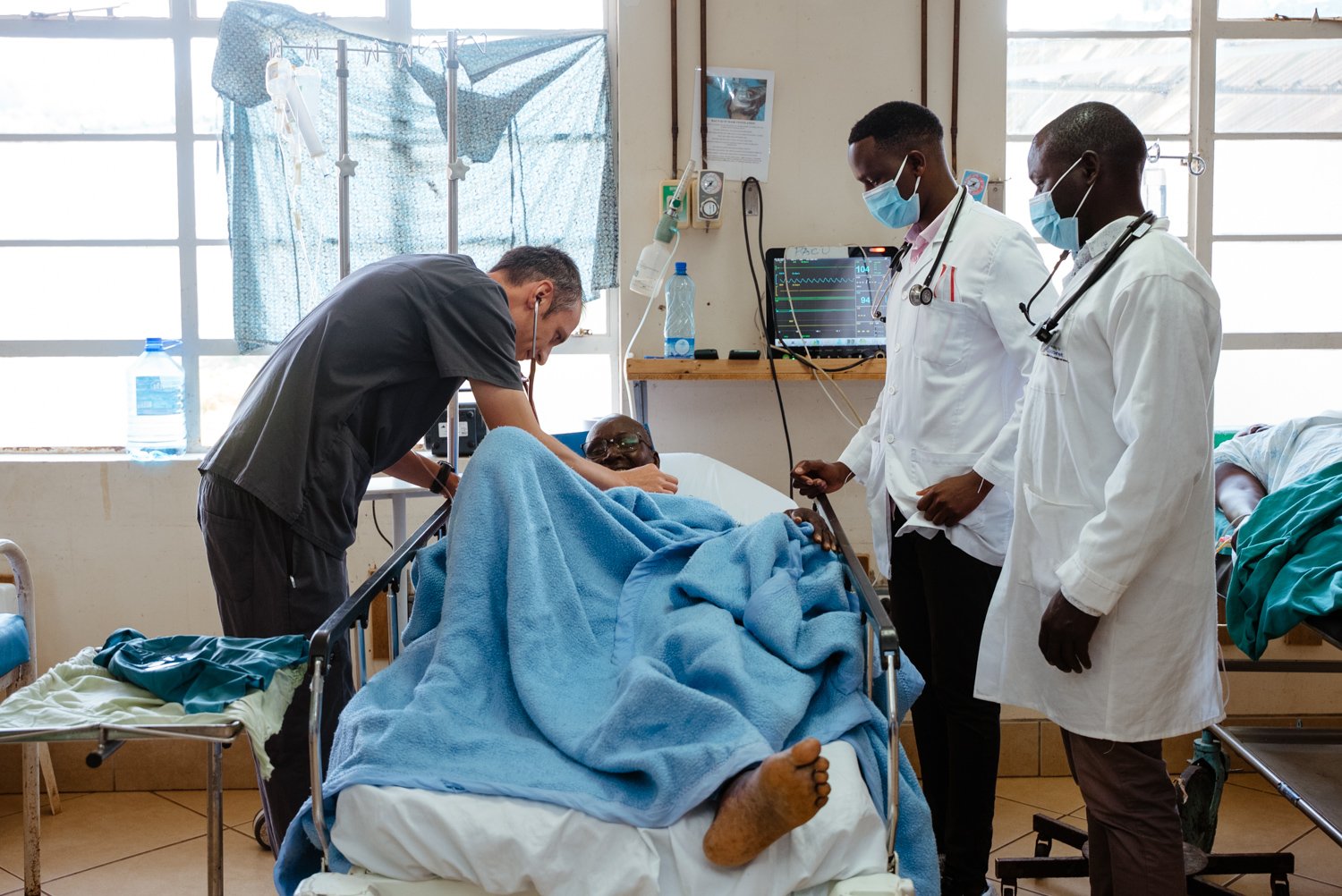
John examines a patient during a consultation.
For all the ways medicine in Kapsowar differs from medicine in the United States, this has been one of John’s greatest surprises: people are still people. The resources may be different and the options far fewer, but patients carry the same fears. Will I get better? What will happen to my family? How will we manage this? And when someone dies, the people who love them feel the same absence.
Whether in a hospital room in the United States or beside a bed in Kapsowar, people want to know that they have not been forgotten. They want someone to tell them the truth, to grieve with them, and to remain when there is nothing left to fix.
Sometimes that presence is the only thing left to offer. But it is not a small thing.
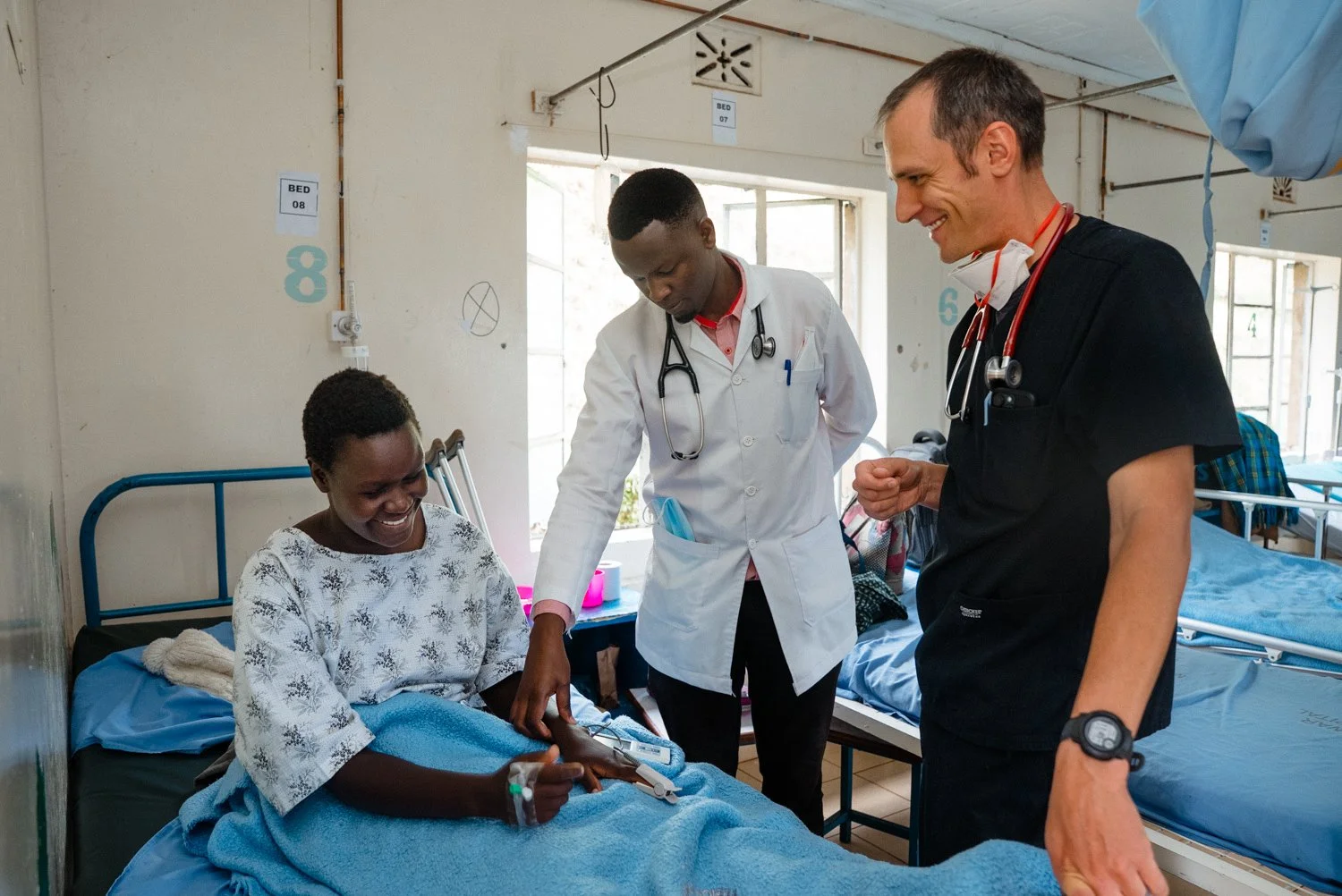
John shares a smile with a patient—a reminder that even when he cannot fix everything, his presence still matters.
At the end of our conversation, I asked John what he would tell the version of himself who was still preparing to move to Kapsowar.
“It’s going to be harder than you think it is,” he said.
There would be more uncertainty, more exhaustion, and more moments when he reached the limits of his knowledge and strength. But John said he would also tell himself that there is freedom in knowing he is where he is supposed to be.
“It’s going to be more than you think it is,” he said, “but you’re going to feel more free than you were before.”
The outcomes have not always been what John hoped for. There are still patients he cannot save and problems he cannot fix. But God has met him here—in the work, in his limitations, and in the people who have welcomed him into their lives.
It has been harder than he imagined. And still, he knows this is where he is meant to be.